Palace of Winds

Kwame Johnson
| 30-10-2024
 · Travel team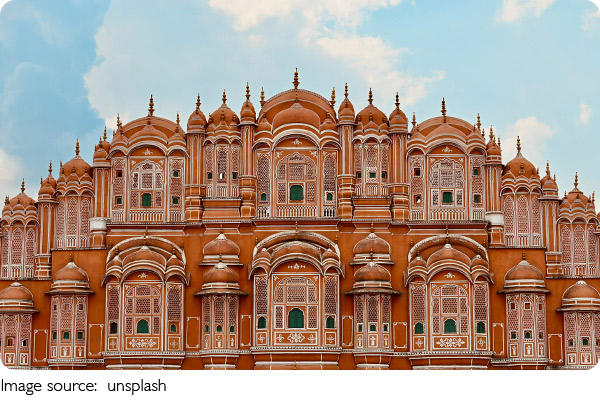
Welcome, Lykkers! Have you heard about the Hawa Mahal, or the Palace of Winds? It is one of Jaipur's most iconic structures. Built in 1799 by Maharaja Sawai Pratap Singh.
This architectural marvel combines grandeur with intricate craftsmanship, offering a peek into Rajasthan's rich cultural and historical heritage.
History and Inspiration
The inspiration for Hawa Mahal came from Khetri Mahal in Jhunjhunu, another Rajasthani structure known for its natural ventilation and intricate façade. Maharaja Sawai Pratap Singh, deeply fascinated by Lord Krishna, wanted the design of the Hawa Mahal to resemble the crown of Krishna. Designed by Lal Chand Ustad, Hawa Mahal stands as a five-story structure resembling a honeycomb, with 953 small windows, or jharokhas, adorned with intricate latticework.
Architectural Brilliance
Built with pink and red sandstone, Hawa Mahal is a fusion of Rajput and Mughal architectural styles. The façade is akin to a honeycomb, and each of its 953 windows is decorated with delicate latticework. The intention behind this design was to allow royal women to observe daily life and festivities on the streets below without being seen. This practice, called purdah, was essential to royal customs, allowing women of the palace to follow societal events while adhering to the norms of the era.
The latticework also serves a functional purpose. The intricate jharokhas allow cool air to circulate through the palace, making it a respite from Rajasthan's sweltering heat. This natural ventilation system gives the palace its name, Hawa Mahal (Palace of Winds).
HAWA MAHAL "Palace of Wind" - Jaipur ● India 【4K】 Cinematic [2020]
Video by Travel Penguin
Unique Layout and Interior
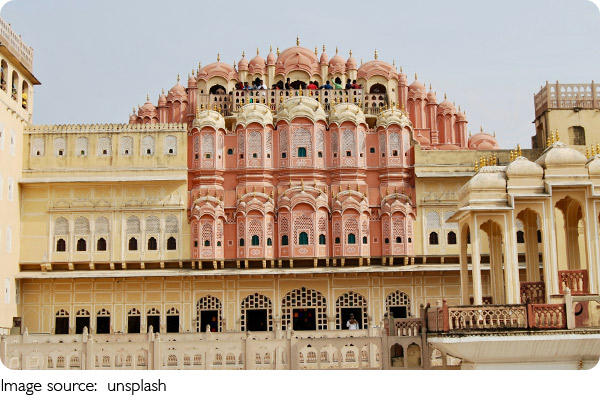
Interestingly, Hawa Mahal does not have a main entrance from the front; instead, one enters through a side alley. The interior of the palace is relatively simple compared to its exterior, with courtyards and narrow passages that connect the floors. Each floor is only a few feet deep, creating a narrow structure that contrasts with the palace's imposing height.
The top floors offer panoramic views of the Jaipur cityscape, including the Jantar Mantar, City Palace, and bustling Johari Bazaar. The views not only captivate tourists but were also a means for royalty to monitor the city's happenings from above.
Cultural and Tourist Significance
Hawa Mahal has become synonymous with Jaipur and is an essential part of Rajasthan's tourism. It attracts visitors from around the world who come to marvel at its design and learn about the culture of the Rajput era. Today, Hawa Mahal houses a museum showcasing relics and artifacts that shed light on Jaipur's regal past. This museum contains ceremonial armor, ancient coins, and miniature paintings that depict the opulent lifestyle of the Rajput kings and queens.
Location and Timing
Hawa Mahal can be easily located in the center of Jaipur. You can easily identify it by just going to the Hawa Mahal road on the edge of the city palace.
The Opening hours are 9:00 a.m. to 4:30 p.m., and the entrance fees are as follows: Local Indians: Rs.10, Foreigners: Rs.50.
Hawa Mahal in Modern Jaipur
The palace's exterior is often bathed in lights at night, highlighting the architecture's elegance against Jaipur's evening skyline. Nearby streets bustle with artisans, local vendors, and markets that offer a glimpse into Rajasthan's vibrant arts and crafts scene.
The Hawa Mahal, with its unique structure and captivating history, stands as a symbol of Jaipur's royal legacy. It is a living testament to the artistry and architectural prowess of the era, blending functionality with beauty.
A visit to Jaipur is incomplete without experiencing the grandeur of the Palace of Winds—a structure that continues to inspire awe centuries after its construction.