Lake Pukaki

Kwame Johnson
| 13-05-2026
 · Travel team
The moment you first see Lake Pukaki, it feels like stepping into a painting. Its milky turquoise waters stretch toward the horizon, framed by rugged mountain peaks dusted with snow.
The color comes from glacial flour—tiny rock particles suspended in the water—that glint in the sunlight. This isn't just a lake to glance at; it's a place that invites slow, deliberate exploration.
Best Time to Experience the Colors
While Lake Pukaki is stunning year-round, timing your visit can make a huge difference. The summer months of December to February offer long daylight hours and warmer temperatures, perfect for walks along the shore. However, the late spring and early autumn often produce the clearest skies, which amplify the turquoise hue against the mountains.
Local tips:
- Morning light: Arrive just after sunrise to see the water shimmer without glare.
- Cloud cover matters: A few scattered clouds add depth to photographs, but thick clouds can mute the water's vibrancy.
- Wind factor: Calm mornings reduce surface ripples, enhancing reflections.
Lake Pukaki
Exploring the Lake Shore
The shoreline offers several trails and lookout points, each giving a slightly different perspective. The Lake Pukaki Viewpoint on the western edge is accessible by car and provides a sweeping panorama, perfect for photography. For those who prefer walking, a gentle 2 km loop along the southern shore allows close encounters with the lake and occasional wildlife sightings, like waterfowl or rabbits grazing near the edge.
Practical advice:
- Wear sturdy shoes, as some paths are uneven.
- Bring water and snacks—there are few facilities directly on the shore.
- Respect private farmland; some trails cross pastoral lands with sheep grazing nearby.
Water Activities and Guided Tours
Though swimming is possible in summer, the water is icy even then, so most visitors stick to kayaking or paddleboarding. Local operators rent gear for about $45–$60 USD per hour, including life jackets and brief safety instruction. A more immersive option is a guided photography tour, which costs around $100 USD for a half-day and offers insights into lighting, angles, and wildlife spotting.
Tips for water activities:
- Early morning or late afternoon paddles offer the calmest waters.
- Avoid venturing too far without a guide; the lake can be deceptively deep and cold.
- Waterproof camera cases are essential if you want to capture the glacial tones from your kayak.
Connecting to Nearby Attractions
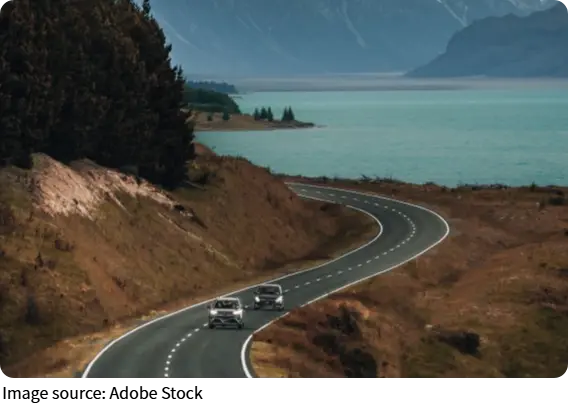
Lake Pukaki is part of a broader region worth exploring. Mount Cook National Park is about 45 minutes away, and the drive itself is a visual treat. Along the route, the lake appears and disappears behind hills, each glimpse revealing a slightly different shade of blue. The Tasman Glacier viewpoint, about 30 minutes north of the lake, offers dramatic ice fields for those willing to extend the journey.
Transportation notes:
- Most visitors rent a car; public transport options are limited and infrequent.
- Fuel stations are sparse; plan ahead if you're driving from distant towns.
- Roads are generally well-maintained, but watch for sand and gravel near lookout points.
Photography and Sunrise Spots
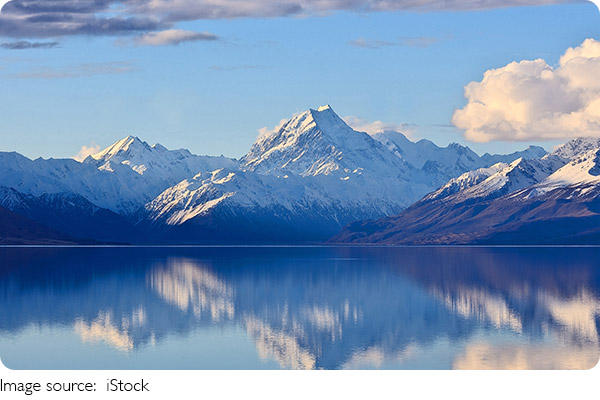
Lake Pukaki is a photographer's dream, and knowing the right vantage points makes all the difference. The western viewpoint is ideal for sunrise, with the sun rising behind the mountains and reflecting on the turquoise water. For sunset, the eastern shore near the small jetty catches the last rays perfectly. Tripods are recommended for longer exposures, especially if you're capturing reflections or the Milky Way on clear nights.
Local insight:
- Bring polarized sunglasses—they help you see the true water color without glare.
- If photographing wildlife, keep a respectful distance; sudden movements can scare birds and other animals.
- Early mornings tend to be less crowded, making it easier to set up shots without tourists in the frame.
Visiting Lake Pukaki is more than a visual experience; it's about pausing, noticing details, and feeling the stillness of a place shaped by glaciers and time. Even a brief stop can be restorative, and those who linger often find themselves returning to the same spot repeatedly, discovering new shades and reflections with each visit.
Next time you're planning a journey through mountainous landscapes, consider leaving your schedule flexible. Give yourself a morning or afternoon at Lake Pukaki just to watch the light shift across the water. It's not about rushing from viewpoint to viewpoint—it's about letting the lake reveal its turquoise secrets slowly, and in doing so, discovering a moment of quiet wonder that stays with you long after you've left.