Apricot Spring

Liam Reilly
| 09-05-2026
 · Travel team
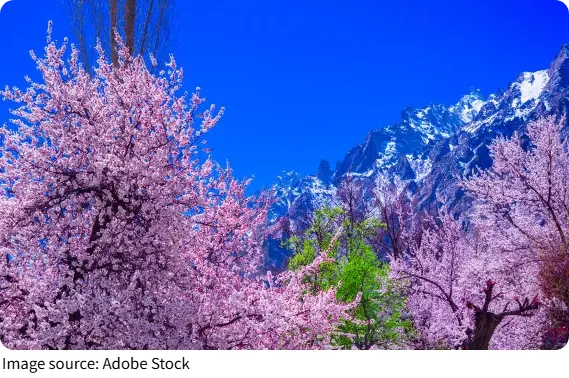
Pink blossom trees line both sides of the road in perfect symmetry, their branches so dense with flowers that the trunks below are barely visible. Ahead, the road runs straight toward a wall of snow-covered peaks that rise several thousand meters from the valley floor with almost no transition between the agricultural lowland and the permanent snow line.
A red bus is pulled over on the verge where the driver has presumably stopped for the same reason anyone would stop here. This is the Karakoram Highway corridor in the Gilgit-Baltistan region during apricot blossom season, and it is one of the most visually extraordinary spring landscapes in Asia.
The apricot orchards that produce this display are not decorative plantings. They are productive agricultural land that has been cultivated in the high mountain valleys of Gilgit-Baltistan for centuries. The region produces some of the finest dried apricots in the world, and the trees that generate the spring blossom spectacle are the same trees whose fruit sustains mountain communities through the winter months.
Where Exactly This Is
The blossom scenery is most concentrated in the valleys around Hunza, particularly the villages of Karimabad, Altit, and Baltit, where apricot and cherry orchards cover the lower mountain slopes and valley floor. The Hunza Valley sits at approximately 2,400 meters elevation, with the Karakoram mountain range rising to peaks above 7,000 meters on every side.
The specific road visible here is the Karakoram Highway running through the Hunza Valley, one of the highest paved international roads in the world, connecting the region to the Karakoram mountain range along the route of the ancient Silk Road trade corridor.
Getting There
Gilgit is the regional capital and primary entry point for the Hunza Valley, served by domestic flights from Islamabad. Domestic carriers operate daily flights when weather permits, with tickets starting from approximately $40 to $70 each way. The flight takes approximately 45 minutes but is highly weather-dependent and cancellations are common, particularly in winter and early spring.
Alternatively, the Karakoram Highway from Islamabad to Gilgit covers approximately 600 kilometers and takes 12 to 16 hours by road, passing through dramatic mountain scenery. Shared transport from the regional bus terminal in Rawalpindi costs approximately $8 to $12 per person.
From Gilgit to Karimabad in the Hunza Valley takes approximately two to three hours by road, with shared jeeps costing approximately $5 to $8 per person.
Gilgit-Baltistan
Key Experiences and Costs
The blossom season typically runs from late February through March depending on elevation and annual weather patterns, with lower valleys blossoming earlier than higher altitude areas.
1. Karimabad town and Baltit Fort, a restored 700-year-old royal residence perched above the valley with views over the blossom orchards and the surrounding peaks. Fort entry costs approximately $3 to $5 per person. Open daily from 9 a.m. to 5 p.m.
2. Altit Fort, slightly older than Baltit and recently restored by the Aga Khan Cultural Service, sits at the valley's edge with equally dramatic views. Entry approximately $3 per person.
3. Eagle's Nest viewpoint above Duikar village, reached by jeep from Karimabad in approximately 30 minutes, provides an elevated panorama over the entire Hunza Valley with the blossom orchards visible as a pink carpet below and the Karakoram peaks above. Jeep hire costs approximately $10 to $15 for the round trip.
4. Village walks through the orchard lanes between Karimabad and Altit during blossom season provide the closest ground-level experience of the trees. No entry fee. Local guides are available for approximately $10 to $15 for a half-day walk.
Where to Stay
Karimabad is the main accommodation hub for the Hunza Valley, with options ranging from basic guesthouses to comfortable hotels with mountain views.
Serena Hotel Hunza is the most established quality property in the valley, with rooms from approximately $80 to $140 per night during blossom season. The property's terrace provides direct views over the valley toward Rakaposhi peak.
Eagle's Nest Hotel at the Duikar viewpoint elevation offers panoramic valley and mountain views from approximately $50 to $90 per night. Several family-run guesthouses in Karimabad provide clean basic accommodation from approximately $15 to $30 per night, with rooftop terraces that serve as natural viewing platforms during the blossom period.
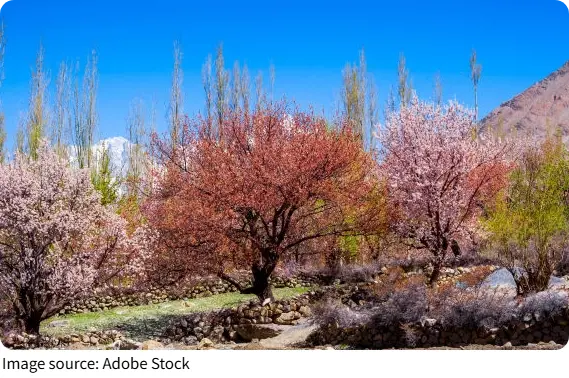
The Hunza Valley blossom season is one of those natural events with a specific and narrow window that rewards planning around rather than stumbling upon. The trees are in full bloom for approximately two to three weeks, the timing shifts slightly year to year, and the combination of pink blossom, green valley floor, and snow-covered peaks only aligns in this particular way during this specific period. Getting the timing right requires checking current season reports before booking. Getting there at all is worth every logistical effort the journey demands.