Why Sports Car Costs

Caroll Alvarado
| 24-08-2026
 · Automobile team
Hello there, readers. Most people expect insurance prices to rise a little when a car looks fast, but with sports cars the jump can be much bigger.
That happens for very specific reasons, not vague ones. A car such as a Chevrolet Corvette or a Porsche 911 usually costs more to repair than a regular sedan, and that higher repair bill feeds straight into your premium.
Insurers also look at how these cars are typically driven, how expensive their parts are, and how likely they are to be stolen. If you own one, or you are thinking about buying one, it helps to know what is actually driving the price instead of just assuming the badge alone is the whole story.
Speed changes the risk
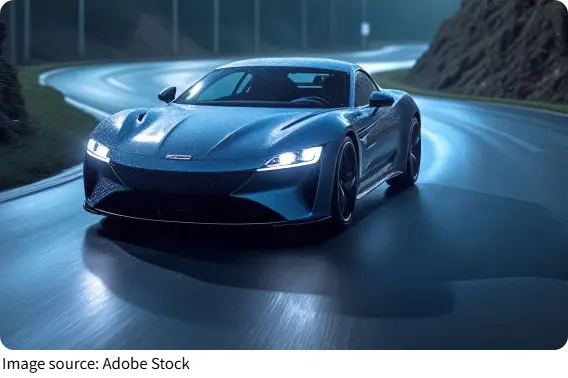
A regular family car gets judged mostly on everyday use, but a sports car gets judged on performance first. Models built for quick acceleration and high top speeds, such as the Mazda MX-5 Miata on the lighter end or the Nissan GT-R at the higher-performance end, are often linked with a greater chance of costly claims. Insurers do not just see horsepower as a fun spec on a brochure, they see a bigger chance of speeding tickets, collisions, and expensive damage. If your car can reach high speeds quickly, that changes how your risk is priced.
Repairs get costly fast
Some cars are simple to fix, but sports cars often are not. A standard bumper or headlight replacement on a common commuter model is one thing. A repair on a BMW M4 or a Porsche 718 Cayman can involve specialized parts, model-specific body panels, and labor from technicians who know those vehicles well. Even a smaller claim can get expensive. That is one of the clearest reasons premiums climb. If the insurer expects to pay more after a crash, you will usually pay more before one ever happens.
Theft matters more than you think
People often focus on speed, but theft risk can push prices up too. Cars that stand out and hold their value, such as a Chevrolet Camaro or a Ford Mustang, can attract more theft attention than a plain compact car. Insurers track those patterns closely. If a model is stolen more often, that shows up in the rate. Your location matters here too. Parking a sports car on a city street overnight is very different from keeping it in a locked garage, and insurers price that difference.
Your profile still counts
The car matters a lot, but you still matter too. A driver with a clean record, steady coverage history, and a lower annual mileage total will usually see a better rate than someone with recent claims or traffic violations. The gap can be significant even for the exact same model. If two people insure the same Subaru BRZ, the one with fewer incidents on record will usually get the lower premium. Deductible choices and coverage limits also affect the final number, so the sports car itself is not the whole bill.
A lot of people assume sports car insurance is expensive for one simple reason, but it is really a stack of reasons working together. Performance, repair costs, theft patterns, and your own driving record all get folded into the price. If you are shopping for one, compare quotes before you buy, because a Ford Mustang GT and a Toyota GR86 will not necessarily land in the same range. So if you want the fun of a sports car without getting blindsided by the insurance bill, check the numbers early and make the car fit your budget, not just your taste.