Horsepower, Torque

Camille Dubois
| 24-08-2026
 · Automobile team
Hello, everyone. Most people look at a sports car spec sheet and go straight to the biggest number.
But if you stop at horsepower and ignore torque, you miss half the story. A car with 300 horsepower and modest torque can feel very different from one with 300 horsepower and a much stronger torque figure, especially when you pull away from a light or push out of a slow corner.
If you want those numbers to mean something, you need to know what each one is measuring and where in the rev range it shows up.
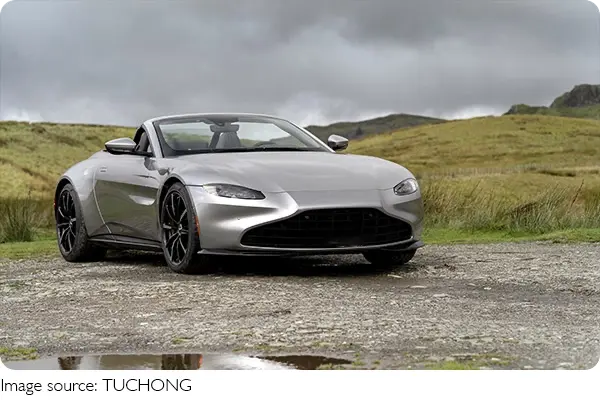
Torque is the first shove
Torque is the twisting force produced by the engine. In plain terms, it is the turning effort available at the crankshaft, and that effort is measured in pound-feet. If you use a one-foot wrench and apply 10 pounds of force, that equals 10 pound-feet of torque. In a car, that twisting force is what gets the drivetrain moving and gives you that immediate push when you press the pedal at low or mid engine speeds. A big V-8 often makes this easy to feel because it builds strong torque early, while a small high-revving engine may ask you to wait until the needle climbs.
Horsepower tells you the rate
Horsepower is tied to how quickly work gets done, not just how much turning force exists. The standard definition traces back to 550 pound-feet per second. In car terms, horsepower is calculated from torque and engine speed with a simple formula, horsepower equals torque multiplied by rpm, divided by 5,252. That number matters because an engine that can keep making torque as rpm rises will produce more horsepower. This is why two engines with the same peak torque can still end up with very different peak horsepower figures if one keeps pulling strongly higher up the tachometer.
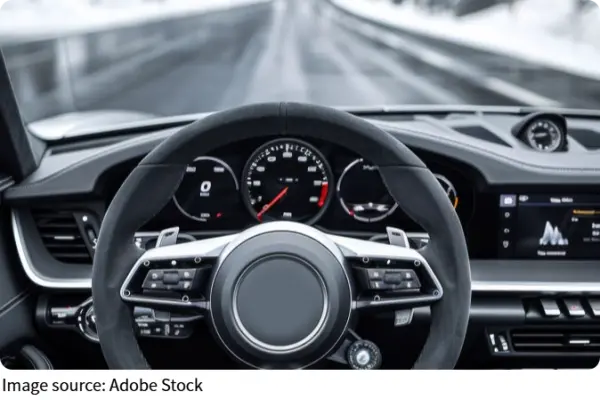
The 5,252 point matters
You will often hear that horsepower and torque curves cross at 5,252 rpm, and for figures measured in pound-feet and horsepower, that is true by definition. It is built into the math, not a special tuning trick. On a dyno chart, this crossing point helps you read what the engine is doing. Below 5,252 rpm, the torque number will be numerically higher than the horsepower number. Above 5,252 rpm, horsepower takes over numerically. If you are looking at a sports car that makes 280 pound-feet at 3,000 rpm and keeps useful torque toward 7,000 rpm, you are looking at an engine that may feel flexible down low but still stay strong at the top.
The car changes the feeling
An engine number does not act alone, because gearing changes how torque reaches the tires. A car with shorter gear ratios can multiply engine torque more aggressively, which is why a lower-torque engine can still feel quick if the transmission keeps it in the right rpm range. This is also why electric motors feel so immediate, they produce maximum torque from zero rpm. For a sports car, that means you should not just compare peak numbers. Look at where peak torque arrives, where peak horsepower arrives, and how many gears the car has to keep the engine in its strong zone. A turbocharged four-cylinder that makes peak torque around 2,000 rpm will behave differently from a naturally aspirated flat-six that builds power higher up, even if their headline outputs look close.
If you are shopping, driving, or just trying to make sense of spec sheets, treat torque as the force you feel first and horsepower as the number that tells you how strongly the car can keep working as speed rises. A quick launch, a strong midrange pass, and a hard charge toward redline do not all come from the same part of the graph. So next time you see horsepower and torque printed side by side, do not ask which one matters more, ask where each one shows up and how the car uses it.