AT vs MT Grip

Naveen Kumar
| 26-08-2026
 · Automobile team
Welcome, and let's begin. Most tires look restrained, but off-road tires do not try to blend in.
You can see the difference in one glance, from the deep voids between tread blocks to the squared-off shoulders that keep working when the road disappears. If you've ever looked at an AT tire parked next to an MT tire, the big question is obvious, why does one look rugged while the other looks almost exaggerated, and what does that do for grip when you actually drive?
The tread is doing work
A highway tire is built to stay quiet and steady on pavement, but an off-road tire has a harder job. It needs to find traction on loose dirt, gravel, sand, and wet ground where the surface keeps shifting under you. That is why the tread pattern gets more open and more aggressive. Wider gaps between tread blocks help the tire clear out mud, dirt, and small stones instead of packing them in. Shoulder lugs matter too. On an off-road route with deep ruts, those outer edges can keep pulling even when the center of the tire is partly buried. The dramatic pattern is not there for looks, it is there so the tread can bite, clean itself, and keep making contact on surfaces that do not stay consistent for even a few feet.
AT tires balance two jobs
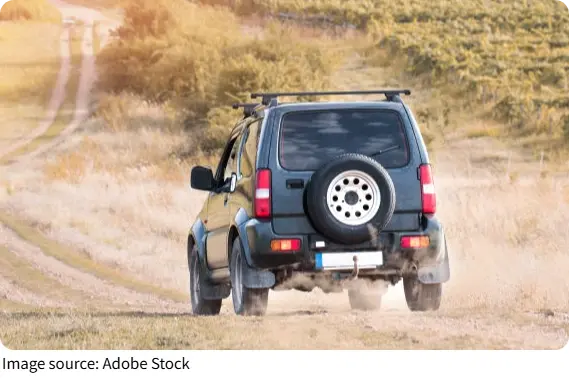
All-terrain, or AT, tires are made for drivers who split time between pavement and off-road use. That balance shows up in the tread. You still get larger tread blocks and open grooves compared with a standard road tire, but the pattern is tighter and more controlled than a mud-terrain design. On pavement, that usually means better ride comfort, less road noise, and steadier everyday handling. Off pavement, AT tires can still handle dirt roads, rocky tracks, and light mud because the tread has enough spacing to hold traction on uneven surfaces. If your weekends involve forest roads, gravel access routes, or a campsite trail after rain, AT tires usually make more sense because they do not give up as much on regular street driving.
MT tires trade comfort for bite
Mud-terrain, or MT, tires go further in one direction. They are built to dig for traction in deep mud and more demanding off-road conditions, so the tread blocks are larger, the voids are wider, and the shoulders are more pronounced. That extra spacing helps the tire shed mud instead of letting it cake between the blocks. In soft terrain, that self-cleaning behavior is a big part of why MT tires can keep moving where less aggressive tires start spinning. But you pay for that specialty. On pavement, MT tires are typically louder and less comfortable than AT tires, and their road manners are not as relaxed during everyday driving. If you mostly drive to work, run errands, and take occasional dirt-road trips, that tradeoff can feel unnecessary pretty quickly.
Grip changes with the surface
It is easy to ask which tire has more grip, but the real answer depends on where you are driving. In deep mud, an MT tire generally has the advantage because its large voids and chunky tread can keep clearing material and digging in. On mixed use surfaces, an AT tire often feels more usable because it can hold its own off-road without making pavement driving feel compromised every day. That is the key difference. MT grip is more specialized. AT grip is broader. If you are driving across gravel roads, hard-packed dirt, and occasional wet trails, the AT setup usually gives you more practical traction across the full week. If your route regularly includes deep mud or rough off-road sections where tires need to keep cleaning themselves, MT tread starts to show why it looks so extreme.
The choice is less about which tire looks tougher and more about where you actually spend your time. Aggressive tread is useful when the surface is loose, wet, or packed with debris, but a more balanced pattern is often the smarter fit for real daily use. If you match the tire to your driving, AT and MT both make sense for different reasons. So before you pick the one with the wildest tread blocks, think about your actual roads, your weekend routes, and what kind of grip you need most.