Why Sports Cars Drink

Lucas Schneider
| 26-08-2026
 · Automobile team
Hello there, readers. You'd expect a low, sleek sports car to be easy on fuel, but that shape is only one piece of the story.
A car can cut through the air cleanly and still use plenty of fuel because the engine, tires, gearing, cooling needs, and tuning are all aimed at speed first. A Chevrolet Corvette and a Porsche 911 both look efficient from a distance, yet once you ask for quick acceleration, high top speed, and strong grip, the trade-offs start piling up fast.
Air drag is not alone
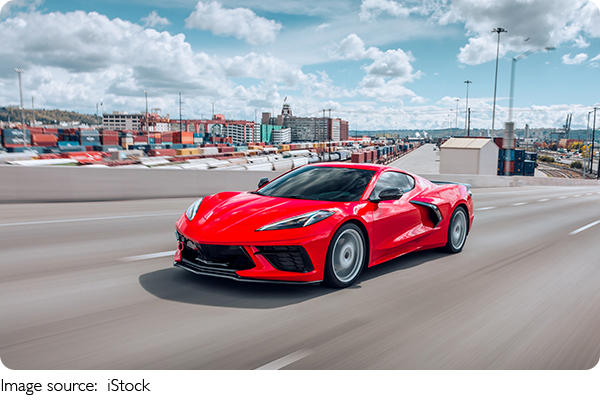
A slippery body helps, but it doesn't erase the basic math of moving fast. Aerodynamic drag rises with speed, and the power needed to push through the air climbs even faster, which is why fuel use jumps on the highway when you keep adding speed. A low coupe usually has less frontal area than a tall SUV, and that helps, but sports cars also add wide tires, large cooling openings, rear diffusers, and wings or spoilers. A Porsche 911 GT3, for example, is shaped carefully for airflow, but its large rear wing is there to add downforce, not to save fuel. That downforce improves stability and grip, yet it also adds drag you have to pay for at the pump.
Power tuning changes everything
You might think the engine is wasteful because it's big, but tuning matters as much as displacement. A performance engine is calibrated to react quickly, hold power at high rpm, and deliver strong output across a broad rev range. That usually means richer fuel mixtures under heavy load, aggressive valve timing, and intake and exhaust setups chosen for power instead of thrift. A naturally aspirated flat-six in a 911 or a high-output V-8 in a Corvette is built to breathe hard at the top end. If you want instant response when you press the pedal, the engine management cannot be tuned the same way as a commuter sedan tuned to upshift early and stay calm at 2,000 rpm.
Gearing and grip add load
Acceleration feels exciting because the car multiplies engine torque through short lower gears, but short gearing can keep the engine spinning higher and using more fuel. Even when modern transmissions add tall top gears, the rest of the ratio set is still designed around fast launches and strong passing power. Then there are the tires. A sports car often wears wide, sticky rubber because grip matters, and that creates more rolling resistance than a narrow low-resistance tire. Put those two together, a gearbox that keeps the engine in its power band and tires that cling hard to the road, and the fuel bill starts making sense.
Cooling and control cost fuel
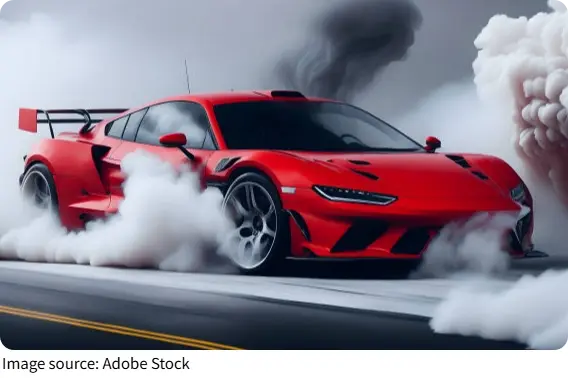
People often focus on the engine and forget the systems around it. A high-output car needs more cooling capacity because extra power creates extra heat. That means bigger radiators, more airflow through the front of the car, and careful ducting that can complicate the aerodynamic picture. Some cars use active grille shutters and adaptive aero parts to reduce the penalty when full cooling is not needed, but once you're driving hard, those systems open up because protecting engine temperature comes first. Fuel economy engineering often tries to reduce pumping losses, friction, and heat waste. Performance engineering accepts some of those losses if the payoff is repeatable power when you stay in the throttle.
The result is not mysterious once you line up the priorities. Sports cars are not tuned to sip fuel, they are tuned to respond fast, stay stable at speed, and deliver strong acceleration over and over. That means aerodynamic choices are shared with grip and cooling, and engine calibration is shared with power and response. So if you're wondering why a sleek coupe still uses a lot of fuel, look past the roofline and watch the whole package, because every fast response you enjoy usually comes with a fuel-cost trade-off.