Mid vs Front Engine

Claire
| 26-08-2026
 · Automobile team
Welcome back, everyone. Most people expect two sports cars with similar power to feel close on the road, but engine placement changes the whole conversation.
A front-engine car puts that big mass ahead of you, around the front axle area or behind it, while a mid-engine car places it between the axles, usually just behind the seats. That one packaging choice changes weight distribution, rotational behavior, traction, cabin space, cooling layout, and even how confident you feel when a corner tightens halfway through.
The mass sits differently
A front-engine sports car usually carries more of its mass toward the nose, even in better-balanced examples such as the Mazda MX-5 or Nissan GT-R. A mid-engine layout shifts the engine closer to the center of the car, and that cuts the polar moment of inertia. In plain terms, the car resists rotation less, so it changes direction more quickly when you turn the wheel. That is why a Ferrari 488 or Toyota MR2 can feel more eager on corner entry than a front-engine coupe with similar grip. You are not imagining it, the car is physically concentrating weight nearer the middle.
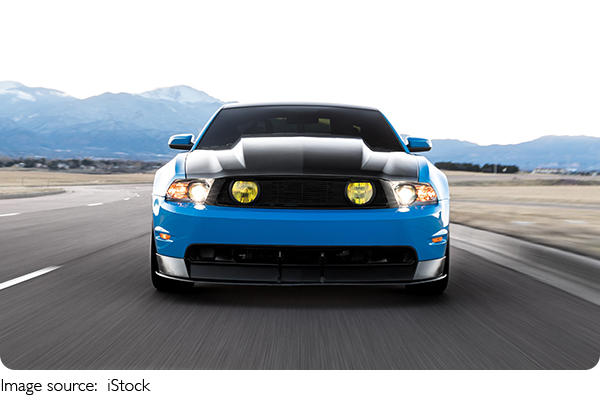
Turn-in gets sharper
People often describe mid-engine handling as quick, but the useful detail is where that quickness shows up. It shows up most clearly in turn-in and in transitions, the moment you flick from one direction to the next. With less mass hanging far ahead of the center, the chassis rotates faster. A Lotus Elise is a clear example, because small steering inputs produce an immediate change in direction. A front-engine car can still be precise, especially one with near 50:50 balance such as the BMW Z4, but it usually feels calmer and more progressive at the limit. You get more warning through the front tires before the whole car rotates.
Traction shifts to the rear
Mid-engine cars do not just turn quickly, they also put power down differently. Because the engine sits closer to the driven rear wheels in most mid-engine sports cars, you get strong rear traction on corner exit. That is one reason cars such as the Porsche Cayman are so effective leaving slower bends. The rear tires have meaningful load, and the drivetrain packaging supports that balance. Front-engine rear-drive cars, from the Nissan 370Z to the Ford Mustang, can still launch hard, but they often ask more from the rear tires because the static load starts farther forward and then moves rearward under acceleration.
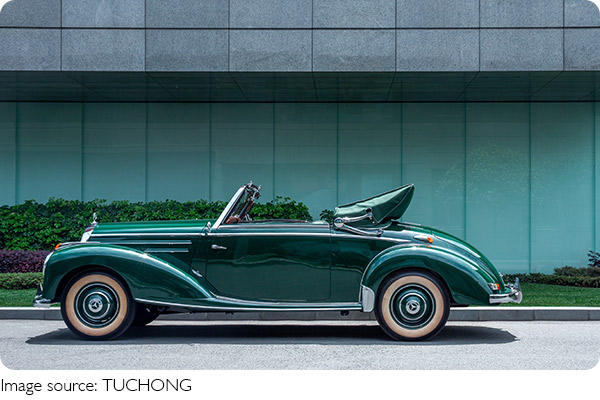
The limit feels less forgiving
This is where the layouts really separate. A mid-engine car often feels neutral right up to the edge, but when grip breaks, the transition can be quicker. The same low polar moment that helps the car rotate into a corner can also make a slide develop faster once the rear steps out. Older short-wheelbase examples such as the first-generation Toyota MR2 earned that reputation for a reason. Front-engine sports cars usually give you a broader window to catch the car. A Chevrolet Corvette with the engine up front, or a Mazda MX-5, tends to communicate understeer and weight transfer in a way many drivers find easier to read and correct.
Packaging changes your experience
Handling does not live in isolation, because the layout changes the whole car around you. A mid-engine design often gives you limited luggage space, tighter engine access, and more complicated cooling airflow because the radiators still need clean air from the front or side intakes. Cars such as the Honda NSX and Ferrari F355 show how much engineering goes into ducting and service access. Front-engine designs usually make cabin packaging and maintenance easier, and they can leave room for a usable trunk behind the rear axle or above it. You feel that difference long before a track day, when you are just trying to pack a bag or deal with routine service.
Driver skill matters more
It is easy to reduce this to a winner and a loser, but that misses the point. Mid-engine sports cars reward clean, deliberate inputs. A Porsche Boxster is friendly, but it still reacts best when you brake in a straight line, release smoothly, and avoid abrupt throttle lifts mid-corner. Front-engine sports cars usually tolerate messy inputs better. A Subaru BRZ or Mazda MX-5 will often let you sense the front tires loading up, then give you a little more time to sort things out. If you are building skill, that extra communication matters. If you already want rapid rotation and strong corner-exit traction, the mid-engine layout gives you more of both.
So if you are trying to understand the real handling gap, do not stop at "mid-engine turns better" or "front-engine is easier." The actual difference is where the mass sits, how quickly the car rotates, how the rear tires take power, and how suddenly mistakes show up when grip runs out. You will feel it in the first quick turn, the first tight exit, and the first moment you ask too much of the chassis. So pick the layout that matches how you drive, not just the badge or the spec sheet.