Master Public EV Charging

Kai
| 29-08-2026
 · Automobile team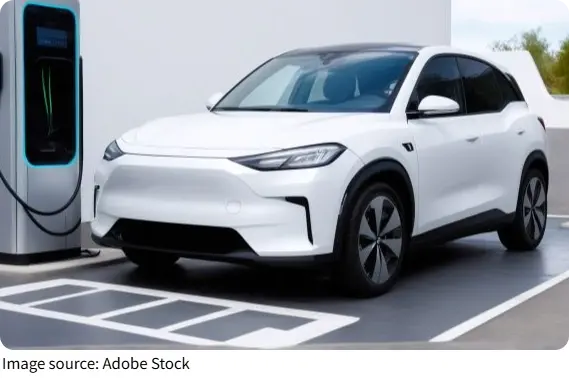
Hi there, readers. This guide explains the fundamentals of public electric vehicle charging infrastructure to help you efficiently power your car away from home. Level 1 AC charging uses a standard 120-volt household outlet, delivering between 1.0 and 1.9 kilowatts (kW) of power.
This method adds approximately three to five miles of range per hour, making it practical only for overnight parking or long-duration stays where the vehicle sits stationary for 12 hours or more. Level 2 AC charging operates on a 240-volt circuit and provides between 3 and 19 kW of output. A typical Level 2 station adds 15 to 30 miles of range per hour, which is sufficient for workplace parking lots, municipal garages, or destination charging at retail centers.
Direct Current (DC) fast charging, often referred to as Level 3, bypasses the vehicle's onboard converter to deliver direct current straight to the battery pack. DC fast chargers operate between 50 kW and 350 kW, capable of charging a compatible battery from 10 percent to 80 percent in 20 to 40 minutes depending on the vehicle's maximum acceptance rate.
Connector Standards Explained
Vehicles utilize different physical ports for electrical transfer, requiring specific connector standards at public stations. The Type 2 connector is the standard for AC charging in many global markets, handling both single-phase and three-phase power up to 22 kW. For DC fast charging, the Combined Charging System (CCS) is the prevailing standard across North America and Europe. CCS integrates two large DC pins below the standard AC pins, allowing a single vehicle port to handle both AC and DC connections seamlessly.
The CHAdeMO standard is an alternative DC fast charging connector primarily equipped on older Japanese models and specific utility vehicles. CHAdeMO uses a dedicated round plug and requires an entirely separate port on the vehicle for AC charging. Many public DC stations provide dual cables with both CCS and CHAdeMO plugs to accommodate different vehicle requirements. You can try this right now: open your vehicle’s charging port door and visually inspect the pin configuration to confirm whether your car uses CCS, CHAdeMO, or a proprietary standard before planning a long-distance route.
Locating Chargers and Payment Methods
Finding a public charger requires the use of built-in vehicle navigation systems or third-party smartphone applications designed for electric vehicle route planning. These digital maps display station locations, real-time availability of individual stalls, supported connector types, and the maximum power output in kW. Payment methods vary significantly among charging network providers. Some modern stations accept standard credit or debit cards via built-in card readers equipped with tap-to-pay technology.
Other locations require the driver to hold an active, pre-funded account with the specific charging network provider, utilizing a proprietary RFID card or a smartphone application to initiate the charging session. Many of these network-specific applications allow users to store payment information, monitor the charging progress remotely, and receive notifications when the session ends. To avoid delays upon arrival, verify the accepted payment methods and download the necessary applications for the specific stations along your intended route ahead of time.
Environmental Factors and Station Etiquette
Ambient temperature significantly influences battery management systems and overall charging speeds. Battery packs have an optimal operating temperature range, typically between 60 and 80 degrees Fahrenheit. In cold weather conditions, the chemical reactions within the battery cells slow down, which inherently reduces the maximum kW acceptance rate.
The charging station and the vehicle communicate to lower the power output to protect the battery cells from damage, resulting in considerably longer charging times. Some modern vehicles feature battery preconditioning systems that actively warm the pack to the optimal temperature when a fast charger is set as the active navigation destination. Practicing proper etiquette at public stations maximizes infrastructure availability for all drivers.
Vehicle owners must unplug and move their cars immediately upon reaching their desired state of charge or the 80 percent threshold. Many networks enforce automated idle fees, charging the user per minute if the vehicle remains plugged in after the energy transfer concludes. Furthermore, electric vehicle charging spots are dedicated specifically for active charging sessions; parking an internal combustion engine vehicle or an electric vehicle in these spots without plugging it in obstructs access for others who need power.
Understanding your vehicle's connector type and maximum charging speed allows you to select the appropriate public stations along your route. You can minimize travel delays by utilizing route-planning applications and preparing alternative payment methods. Review your vehicle owner manual to determine your exact maximum DC fast charging acceptance rate in kilowatts.