Tracking Individual Niches

Ethan Sullivan
| 30-08-2026
 · Animal team
Animals of the same species do not always use their surroundings in the same way. Some may prefer particular feeding areas, avoid human activity more strongly or repeatedly choose very specific environmental conditions.
Until recently, these differences were often treated as background variation rather than an important ecological pattern. A new reproducible workflow now gives researchers a standardized way to measure those differences using GPS tracking data.
The approach was developed to help ecologists study habitat specialization at the level of individual animals rather than relying only on averages for entire populations.
Looking beyond the species average
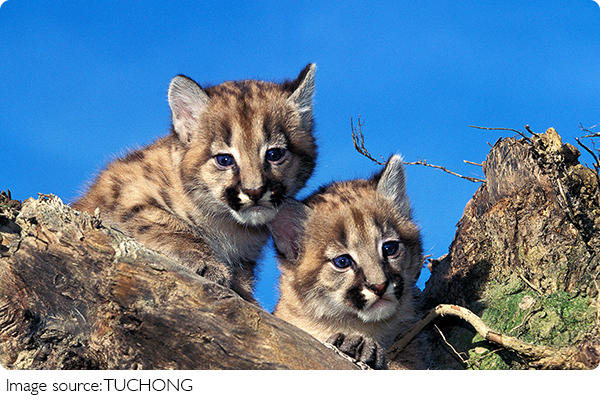
The ecological niche describes the range of environmental conditions a species needs to survive and reproduce. Traditionally, researchers have applied this concept to whole species or populations. However, individuals within the same species can differ substantially in behaviour, diet, movement and habitat selection.
These differences can matter for long-term survival. If some animals are able to use a wider range of habitats or respond differently to environmental pressure, they may contribute to the overall resilience of the population.
The new workflow is designed to make this individual variation measurable rather than treating it simply as statistical noise.
Each animal has its own niche
At the centre of the method is the idea of an individualized niche. For every tracked animal, researchers distinguish between two types of environmental space. The potential niche represents the conditions that are available to the animal within the area it can access. The realized niche represents the conditions that the animal actually uses.
This distinction allows researchers to move beyond simply mapping where an animal travelled. They can instead ask which available habitats it actively selected and how strongly those choices differ from the behaviour of other individuals.
Turning GPS tracks into measurements
The workflow is implemented entirely in R and combines methods from ecological niche modelling, behavioural ecology and spatial ecology. It is divided into three broad stages: preparing the data, carrying out the analysis and generating the final outputs.
One important part of the method uses mixed-effects resource selection functions. These statistical models estimate the average habitat preferences of a group while also measuring how strongly each individual differs from that average.
The workflow also uses hypervolume exploration methods. These represent the environmental conditions available to an animal as a multidimensional space, allowing researchers to compare what was available with what was actually used.
What researchers can measure
The method provides several practical indicators of individual habitat use. One is niche breadth, which shows whether an animal uses a wide or narrow range of environmental conditions. Another is niche overlap, which measures how much the habitat use of different individuals overlaps.
Researchers can also calculate repeatability, or how consistently an animal makes similar habitat choices over time.
Together, these measures make it possible to compare individuals in a more systematic way and investigate whether specialization is temporary, persistent or shared across a population.
Northern lapwings provide the test case
The workflow was demonstrated using publicly available GPS data from 13 northern lapwings.
Researchers combined the movement records with several environmental layers, including earthworm abundance, human presence, pesticide exposure, land management, soil characteristics and vegetation.
This made it possible to identify the range of conditions available to each bird and then compare them with the conditions the bird actually selected. The example shows how individual habitat preferences can disappear when researchers rely only on population-wide averages.
Why individual variation matters
Animals can differ in genotype, body form, life strategy, diet and behaviour. Individual-based approaches make it easier to understand how these differences influence responses to environmental stress and local conditions.
This has important consequences for conservation.
Models that include individual energy costs, demographic patterns, habitat selection and life-history traits can provide a more detailed picture of how wild populations function.
They may also improve predictions of how populations will respond when habitats are altered, resources decline or other environmental pressures increase.
A method that can be used across species
Although the workflow was demonstrated with northern lapwings, it was designed to be transferable.
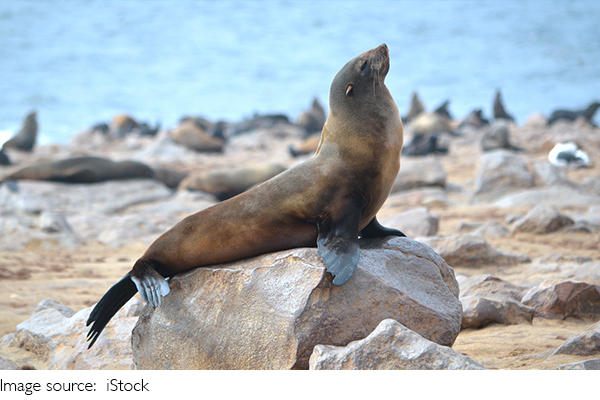
It can potentially be applied to other mobile species whenever suitable GPS tracking data are available. That could include many birds and mammals, as well as other animals monitored through modern tracking technologies.
The main advantage of the new approach is that it moves ecological research beyond population averages. Instead of asking only which habitats a species uses, researchers can examine how different individuals make their own choices, how consistent those choices are and what those differences may mean for the future of the population.