Can Reine Work in Winter?

Anika
| 16-09-2026
 · Travel team
Welcome back. Reine can support a calm winter visit when ferry timing, limited buses, short daylight, and a weather-ready lodging plan are settled before arrival.
Three or four nights provide more than one opportunity for clear mountain views and evening sky conditions.
Winter generally runs from November through March, with daylight changing rapidly across the season. Travelers should build spare time into every connection because wind, ice, and sea conditions can alter roads and ferry departures.

Choose an Arrival Route
The western approach combines a flight to Bodo with the ferry to Moskenes, about five kilometers from Reine. A direct sailing can take roughly three hours and fifteen minutes, although the published winter timetable varies by day. Foot passengers travel without a standard fare; an optional reservation costs about US$7 and helps secure capacity on a chosen departure. Arrive early and check live service notices before leaving for the terminal.
Travelers bringing a conventional car on the Bodo–Moskenes route face a listed fare of about US$65 for a vehicle up to six meters, with a reservation charge added when used. The eastern alternative reaches Lofoten through Evenes and the E10, then continues west by car or bus. It avoids a sea crossing but creates a long overland transfer. Avoid scheduling a nonchangeable flight immediately after either winter route.
Use Buses With Care
Regional line 300 connects Å, Reine, Leknes, Svolvær, and Narvik, while local line 18-772 serves Å, Reine, and Hamnøy. Frequencies can be sparse outside the busiest season, and buses do not accept seat reservations. Buy and activate the ticket before boarding when using the official travel app. A bus single starts around US$4.86, while a one-zone 24-hour ticket begins near US$14.57.
The seven-day Travel Pass Nordland costs about US$215 and covers unlimited county buses and express boats, including night buses, but excludes trains, airport coaches, and commercial routes. It is worthwhile for a wider car-free circuit, not a short Reine–Hamnøy stay with a few rides. Express-boat users must reserve a free place and arrive at least 15 minutes early. Compare the pass with point-to-point fares after mapping every intended segment.
Stay Near the Right Views
Reine places visitors near the harbor, services, and the bus route, making it practical without a vehicle. Hamnøy and Sakrisøy provide close waterfront scenery but fewer conveniences and a greater need to track buses or arrange a ride. Svolvær offers more urban services and stronger eastern transport connections, yet it is too far away for a relaxed daily commute to Reine. Choose the base according to the main daylight activity.
Eliassen Rorbuer in Hamnøy displays cabin and apartment rates from about US$236 to US$387 nightly, depending on size, position, and facilities. Options range from studios to larger waterfront units, and many include a kitchenette, which can reduce meal spending. Confirm whether taxes, cleaning, and breakfast are included in the final rate. Its direct policy permits cancellation at least 24 hours before arrival; later cancellation can lead to the full stay charge.
Eliassen Rorbuer
Plan Around Winter Light
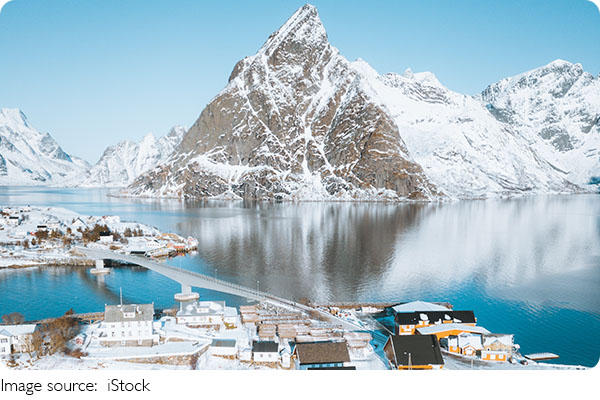
Around the winter solstice, the sky may brighten for roughly two to four hours without the sun rising above the horizon. By March, daylight exceeds ten hours. Put village walks and transfers near the middle of the day, then leave evenings open for changing sky conditions without promising a display. Reine harbor, the roadside view toward Hamnøy, and the open shoreline near Sakrisøy provide varied compositions without requiring a mountain ascent.
Pack thermal layers, a waterproof outer shell, warm gloves, sturdy waterproof footwear, and removable ice grips. The E10 is the main road across the islands, and exposed sections may close in strong wind with no quick detour. Check road, ferry, bus, and forecast updates each morning.
Keep one indoor rest period available when the useful outdoor window becomes shorter than expected. Travelers without relevant winter mountain experience should use a qualified local guide for elevated terrain rather than treating a summer route as a winter walk.
Reine works in winter when the itinerary protects connections and treats weather changes as a planning constraint. A well-placed cabin, several nights, and one flexible daylight plan create a safer and more useful stay than a fast island circuit.