Skagsanden After Dark

Sophie
| 11-11-2026
 · Travel team
Skagsanden Beach sits beside the E10 on Flakstadøya, making it one of the easiest coastal locations in Lofoten for a Northern Lights night. Unlike the previous Lofoten guides, this is not about covering distance or climbing anything.
For Lykkers, the challenge is deciding when to leave your accommodation, how long to wait, and when to move elsewhere. The beach is free to visit, so the smartest strategy is to spend your money on a flexible base rather than an expensive one-night aurora experience.
Skagsanden beach
Stay Close to Skagsanden
Northern Lights photography becomes much easier when you can reach the beach quickly. A long nighttime drive adds risk while doing nothing to improve the sky.
Base Yourself Around Ramberg
Ramberg is roughly 5 km from Skagsanden and makes a practical base because it has accommodation, food options, shops, and fuel. Staying around Ramberg or Flakstad lets you reach the beach in roughly 5 to 10 minutes by car.
Reine is also workable, but it is roughly 30 km away. That difference matters at midnight when roads may be icy and visibility poor.
Stay at least 3 nights in western Lofoten if seeing the aurora is important. Five nights gives you considerably more flexibility because cloud, rather than weak solar activity, often ruins an individual evening.
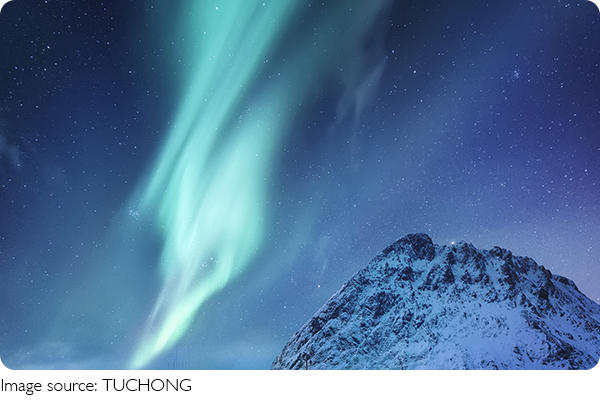
The visible aurora season in Lofoten runs approximately from late August to mid-April. For a landscape like the snowy scene here, January through March is a more logical target. You get proper darkness, winter mountains, and increasing daylight for daytime activities.
Do not choose December simply because the nights are longest. More darkness does not automatically produce more clear sky or stronger aurora.
Budget for Flexibility
Skagsanden itself requires no attraction ticket. Your main costs are accommodation, transport, food, and any parking charge that applies when you visit.
For two people, a winter rental vehicle may commonly cost roughly NOK 700 to 1400 per day, while accommodation in western Lofoten can easily reach NOK 1500 to 3000 or more per night depending on the property and dates. These are planning ranges rather than fixed prices.
That means three nights can quickly become a NOK 6000 to 12000 trip for two before flights and major activities.
This is why paying for several nights is more useful than spending heavily on one premium aurora excursion. You are purchasing multiple chances at clear weather.
If you are uncomfortable driving on snow and ice, however, the calculation changes. A guided aurora trip is worth considering because someone else handles winter driving and can move between clearer parts of Lofoten.
Run a Two-Hour Watch
Do not stand on Skagsanden from early evening until midnight simply because an app displays a promising number. Lofoten lies beneath the auroral oval, so even relatively modest activity may produce visible aurora.
Check Clouds Before KP
Use this order: cloud cover first, road conditions second, aurora activity third.
If Skagsanden is completely covered by low cloud, a high forecast number does not rescue the view. If the sky is clear, even modest activity can be worth watching.
Aurora can appear whenever the sky is sufficiently dark. A practical observation window is roughly 20:00 to midnight, although displays can occur earlier or later.
Start with 60 to 90 minutes at Skagsanden. If the sky remains clear, stay longer. If cloud moves in and another nearby coast has clearer conditions, relocate rather than waiting indefinitely.
Lofoten geography makes this possible. Several beaches lie relatively close together, so a short drive may put a mountain ridge between you and local cloud.
Never stop on the E10 or occupy a passing place because the aurora suddenly appears. Use legal parking and walk from there.
Stay Above the Waterline
The beach itself introduces a hazard that aurora forecasts cannot measure.
At night, judging incoming waves is difficult. Remain well above the active waterline, particularly when the sea is rough. Do not walk onto wet rocks, ice-covered surfaces, or unfamiliar shoreline terrain merely to improve a photograph.
You also do not need to wander far along the beach. A broad northern sky is available close to the access area.
For photography, bring a tripod and start with a wide lens. A useful initial exposure is around 2 to 5 seconds for a moving aurora, then adjust ISO and aperture according to brightness. Longer exposures may make a faint display visible but can turn fast-moving structures into an indistinct green area.
Keep spare batteries inside an inner pocket because cold reduces battery performance.
Wear thermal layers, insulation, waterproof outer clothing, gloves, and winter footwear with strong traction. Standing still for 90 minutes feels much colder than walking for the same period.
If nothing appears after two hours and the forecast is weakening, return to your accommodation. You have several nights for a reason.
Getting There
Most travelers fly into Leknes Airport (LKN) or Harstad/Narvik Airport (EVE), then rent a car for the drive to Ramberg. Return flights from Oslo to Leknes typically cost NOK 1,500–3,000 depending on the season. A winter rental car with proper tires starts around NOK 700–1,400 per day. From Leknes, the drive to Ramberg takes about 30 minutes on the E10. A local bus also runs along the E10, with tickets around NOK 50–100, but evening service is limited.
Where to Stay
Ramberg and Flakstad have a range of accommodation options. The Ramberg Gjestegård offers rooms from around NOK 1,200–1,800 per night, including breakfast. For a more budget-friendly option, the Lofoten Beach Camp near Skagsanden has cabins from roughly NOK 1,500–2,500 per night. In Flakstad, the Fredvang Apartments start at around NOK 1,000–1,500 per night for self-catering units. Book well in advance during the winter aurora season, as rooms fill up quickly.
Where to Eat
Dining options in Ramberg are limited but practical. The Ramberg Gjestegård restaurant serves Norwegian dishes with main courses around NOK 250–350. For a quicker meal, the local shop and café in Ramberg offer sandwiches and snacks for roughly NOK 100–150. In Leknes (about 30 minutes away), there is a wider selection of supermarkets and restaurants with main dishes around NOK 200–300. For self-catering, stock up on groceries in Leknes before heading to Ramberg.

For most Lykkers, Skagsanden is best treated as a flexible 1 to 2 hour Northern Lights watch rather than an all-night vigil. Stay around Ramberg or Flakstad for at least 3 nights, preferably longer when aurora is a major priority, and consider January through March if you also want a winter landscape. Check cloud and road conditions before aurora strength, keep well above the active shoreline after dark, and relocate when another nearby area has clearer sky. The beach itself is free, so put the budget into extra nights and safe transport instead of expecting one expensive evening to guarantee the Northern Lights.