Lofoten's Coastal Heritage

Sophie
| 11-11-2026
 · Travel team
Located in northern Norway, the Lofoten Islands are known for their dramatic mountains, rugged coastline, and distinctive wooden architecture.
Across the archipelago, traditional fishing cabins, historic waterfront buildings, boathouses, and colorful village homes reflect a way of life shaped by the sea.
Lofoten's architecture is closely connected to its fishing heritage. Many settlements developed around sheltered harbors, where fishermen could live near their boats and work. Today, these historic buildings remain an important part of the islands' character, making Lofoten an appealing destination for travelers interested in architecture, coastal scenery, and local history.
Lofoten
Traditional Rorbuer: Lofoten's Fishing Cabins
One of the most recognizable building types in Lofoten is the rorbu, a traditional fishermen's cabin. These buildings were originally used as seasonal accommodation for fishermen who traveled to the islands during the fishing season.
Rorbuer were commonly built close to the shoreline, allowing fishermen to reach their boats and working areas easily. Their simple rectangular layouts, pitched roofs, and practical wooden construction reflected the needs of coastal life. Red became a familiar color because relatively inexpensive paint was widely used on working buildings.
Many former fishing cabins have since been restored and converted into visitor accommodation. Staying in one offers an opportunity to experience Lofoten's traditional architecture while enjoying views of the surrounding mountains, harbors, and waterways.
Hamnøy and Reine: Iconic Red Cabins
Hamnøy and Reine are among the most recognizable settlements in Lofoten. Their traditional wooden buildings, sheltered harbors, and dramatic mountain surroundings create some of the archipelago's most memorable coastal views.
Hamnøy is particularly known for its red fishermen's cabins positioned along the waterfront. Wooden bridges connect parts of the settlement, providing convenient access across the surrounding water. The combination of historic buildings and steep mountain scenery makes it a popular place for photography.
Reine has a broader village landscape, with colorful houses, traditional cabins, and waterfront buildings spread across several small islands. Visitors can explore its streets, walk along the harbor, and appreciate how the settlement developed around the natural coastline.
Henningsvær: A Village Built Around the Harbor
Henningsvær is a distinctive fishing village spread across several small islands and connected by bridges. Its architecture reflects the importance of fishing and maritime activity, with wooden houses, warehouses, boathouses, and traditional waterfront buildings surrounding the harbor.
The village combines historic structures with galleries, small shops, and contemporary spaces. Walking through its streets provides a closer look at the relationship between the buildings, the harbor, and the surrounding islands.
Nusfjord: A Preserved Fishing Settlement
Nusfjord is one of Lofoten's notable historic fishing villages. Its traditional harbor layout includes fishermen's cabins, boathouses, workshops, and other wooden buildings that illustrate the development of the local fishing industry.
The settlement's preserved architecture offers a valuable glimpse into earlier coastal life. Visitors can walk around the harbor, observe the traditional buildings, and explore the village's historic working spaces.
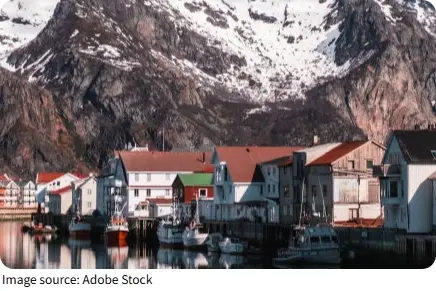
Å: Architecture at the Western End of Lofoten
Å lies near the western end of the Lofoten archipelago and is known for its traditional fishing-village character. Wooden fishermen's cabins, boathouses, workshops, and waterfront buildings form a compact settlement closely connected to the surrounding sea.
The village also has a fishing village museum with historic buildings and working spaces, including a fisherman's cabin, a smithy, a boathouse, and a former cod liver oil factory. These preserved structures help visitors understand how fishing shaped the village's architecture and daily life.
Kabelvåg: Historic Buildings and Maritime Heritage
Kabelvåg is one of the historic settlements in Lofoten, with a long connection to fishing and maritime trade. Its older buildings and waterfront areas provide another perspective on the archipelago's architectural heritage.
The Storvågan area is particularly interesting. Its museum occupies a manor house completed in 1815, while nearby boathouses and traditional wooden boats reflect the importance of coastal activities. A visit to Kabelvåg adds historical context to the fishing villages found elsewhere in Lofoten.
How to Get There
Lofoten can be reached by air, road, or a combination of public transport and ferry connections. The main settlements for planning a visit include Svolvær, Leknes, Reine, and Å.
Travelers arriving by air can usually connect through Bodo or use the airports serving Svolvær and Leknes. Another option is to fly to Harstad/Narvik and continue by road. Depending on the route and season, domestic flights may cost approximately $100–$250 or more.
Renting a car is one of the most convenient ways to explore the villages and stop at viewpoints along the archipelago. Rental prices are approximately $85–$150 per day, excluding fuel and insurance. The scenic road journey from the Raftsundet area to Å covers roughly 230 km, although additional time is needed for sightseeing.
Public buses connect major settlements such as Svolvær, Leknes, and Reine. A typical journey may cost around $15–$30, depending on the distance. Bus services can be less frequent in some areas, so checking schedules before traveling is important.
Accommodation in Traditional Buildings
Lofoten offers a range of accommodation, from simple guesthouses to restored fishermen's cabins and waterfront properties. Staying in a traditional rorbu is particularly suitable for visitors interested in the islands' architectural heritage.
Approximate nightly prices include:
- Guesthouses and simple rooms: $105–$190
- Traditional fishermen's cabins: $180–$300
- Private waterfront cabins: $250–$425 or more
- Hotels: $130–$250
For a three-night visit, travelers could spend the first night in Svolvær or Kabelvåg before staying two nights around Reine or Hamnøy. This arrangement provides access to both the eastern and western parts of the archipelago without changing accommodation every night.
Prices vary according to season, location, and accommodation standard. Summer is generally a busy period, so booking ahead is advisable.
Local Food and Dining
Lofoten's food traditions are closely linked to the sea. Fish and seafood feature prominently in local cuisine, with cod, salmon, and seasonal catches appearing in many dishes.
Visitors can look for traditional fish soup, grilled cod, seafood plates, and freshly prepared fish meals. Cafes and restaurants also serve bread, baked goods, chicken, and vegetable dishes, providing options beyond seafood.
Typical meal prices are approximately:
- Breakfast or a cafe meal: $10–$20
- Simple lunch: $20–$25
- Restaurant main course: $30–$50
- Seafood meal: $35–$60
Dining prices can be higher in popular villages and during the main travel season. Grocery shops and self-catering accommodation can help travelers manage daily expenses.
Best Time to Explore Lofoten's Architecture
The best time to visit depends on the scenery and travel experience you prefer.
- Summer (June–August): Long daylight hours make it easier to explore villages, walk along the waterfront, and photograph traditional buildings. This is also one of the busiest periods for visitors.
- Spring (April–May): Snow may remain on the surrounding mountains, while longer days create good conditions for sightseeing. Some services may operate on reduced schedules.
- Autumn (September–October): Changing light and quieter villages create a different atmosphere. The weather can be unpredictable, so flexible plans are useful.
- Winter (November–March): Snow-covered mountains and shorter daylight hours give the villages a distinctive appearance. The northern lights may be visible when skies are clear and conditions are suitable.
Practical Tips for Visiting
- Plan your route: Lofoten's settlements are spread across a long archipelago, so allow enough time for driving between villages.
- Explore on foot: Walking is one of the best ways to appreciate traditional houses, harbors, and waterfront details.
- Visit local museums: Museums in places such as Å and Kabelvåg provide useful historical context.
- Consider a traditional cabin stay: A restored rorbu offers a closer connection to the islands' fishing heritage.
- Respect private property: Some traditional cabins are privately owned or used as accommodation. Enjoy their exterior architecture without entering restricted areas.
- Allow time for photography: Weather and light can change quickly, so spending more than a few minutes at each village can make the experience more rewarding.

Experience Lofoten's Architectural Heritage
Lofoten's traditional architecture tells the story of communities shaped by fishing, maritime trade, and life along the Norwegian coast. From the red cabins of Hamnøy and Reine to the preserved harbor buildings of Nusfjord and Å, each settlement offers a different view of the archipelago's past.
A three-to-five-day journey provides a good opportunity to explore several villages, visit local museums, and experience the landscape surrounding these historic buildings. For travelers interested in coastal heritage, Lofoten offers a memorable combination of traditional wooden architecture, working harbors, and remarkable natural scenery.