Uluru on Foot

Daniel
| 11-11-2026
 · Travel team
Welcome, walkers! Uluru’s base trail reveals a changing ring of sandstone textures, shaded recesses, and open desert views. The full circuit is about 10.6 kilometres and usually takes around three to four hours at a steady pace.
It is a substantial walk in a hot, exposed environment, so the best visit depends on the season, the day’s temperature, and the park’s safety guidance. Focus on the marked route and geological details rather than trying to cover the circuit quickly.
Uluru
Read the Rock as You Walk
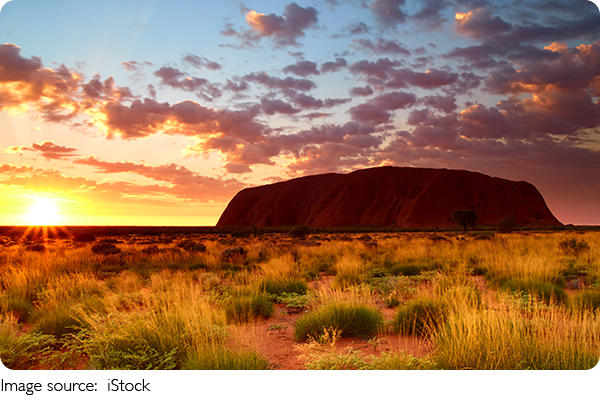
Uluru is a massive sandstone formation shaped over geological time by weathering and erosion. From the path, the rock can appear smooth in one section, deeply grooved in another, with broad faces shifting from orange-red to deeper rust as sunlight changes. Those variations are part of the experience: moving slowly makes it easier to notice the grain, folds, and shallow channels that are easy to miss from a distant lookout.
The base route is divided into sections, and visitors can choose shorter walks at access points rather than completing the entire loop. Carry a map or use the park information signs to understand distances and facilities. Stay on the designated route and respect all closure signs; environmental conditions and park management can affect which parts are accessible.
Timing and Safety Matter
Early morning is generally the most comfortable time to walk, with cooler air and softer light on the stone. The park may close or restrict trails during extreme heat, storms, or other unsafe conditions, so check the day’s alerts before leaving Yulara. Do not begin a long circuit late in the day without enough time, water, and daylight to finish safely.
Wear a sun hat, supportive shoes, and lightweight clothing that covers you from the sun. Bring more water than you expect to use, take regular breaks, and turn back if the heat or your energy level becomes concerning. The route is mostly exposed, so heat management is not an optional detail.
Park Pass and Getting Around
Parks Australia lists a three-day park pass at A$38, and an annual pass at A$50. The pass covers access to Uluru-Kata Tjuta National Park, where park roads connect the walking areas, Cultural Centre, and designated viewing points.
Yulara is the main visitor base, reached by air at Ayers Rock Airport or by road from other Red Centre destinations. Resort transfers connect the airport and accommodation area, while shuttle services and tours provide options for reaching park stops; check current schedules and whether a pass is included. If you rent a car, account for fuel and the distances between Yulara and the park, and avoid assuming that a short-looking map route is walkable.
Three Bases in Yulara
Ayers Rock Campground is the lower-cost choice, with published ranges around A$30–A$190 per night depending on site or cabin type. It suits travelers who want flexibility and are comfortable with a more independent stay. The Lost Camel Hotel has appeared around A$330–A$360 per night for a standard hotel base close to resort facilities, while Desert Gardens Hotel has listed roughly A$420–A$600 for a higher-comfort option.
These Northern Territory sample ranges vary by room, season, and availability, and may not include every fee. Book early for school holidays and popular cooler months, then compare airport transfers, meal options, and cancellation conditions. A campground can be excellent value, but a hotel room may be preferable after a long drive or full circuit walk.
Build a Flexible Visit
Pair the base walk with one or two shorter marked routes rather than squeezing every viewpoint into a single day. Keep time for the Cultural Centre and the designated sunrise or sunset areas, which offer different perspectives without adding another long hike. Keep to signs and walkways, carry out all rubbish, and leave stones and natural features undisturbed.
Before setting off, check the park’s walk status and heat guidance, top up water, and let someone know your plan. If the full circuit is not sensible that day, a shorter section is still a worthwhile way to experience the rock at close range. Which would you choose: the quiet cool of dawn or the warm color near sunset?
Getting There
Most travelers fly into Ayers Rock Airport (AYQ), which is about 15 minutes from Yulara. Return flights from Sydney or Melbourne typically cost A$400–800 depending on the season. A resort shuttle connects the airport to Yulara accommodation for around A$20–30 per person. If you rent a car, a compact vehicle starts at roughly A$60–100 per day, plus fuel. Alternatively, you can drive from Alice Springs, which takes about 4.5 hours (450 km) on the Stuart and Lasseter Highways.
Where to Eat
Yulara has a small selection of restaurants and cafes, mostly concentrated in the resort area. The Outback Pioneer Kitchen serves casual meals with main dishes around A$25–35. For a quicker option, the Gecko's Café offers sandwiches and snacks for roughly A$15–25. In the Cultural Centre, the Ininti Café provides light meals and refreshments for around A$10–20. For self-catering, the Yulara supermarket stocks basic supplies, but it is expensive, so bring what you can from Alice Springs.

Uluru rewards a slower visit, where small changes in texture and light become the focus rather than a checklist. Choose a safe walking window, give the route enough time, and use Yulara as a comfortable base for exploring the wider park.